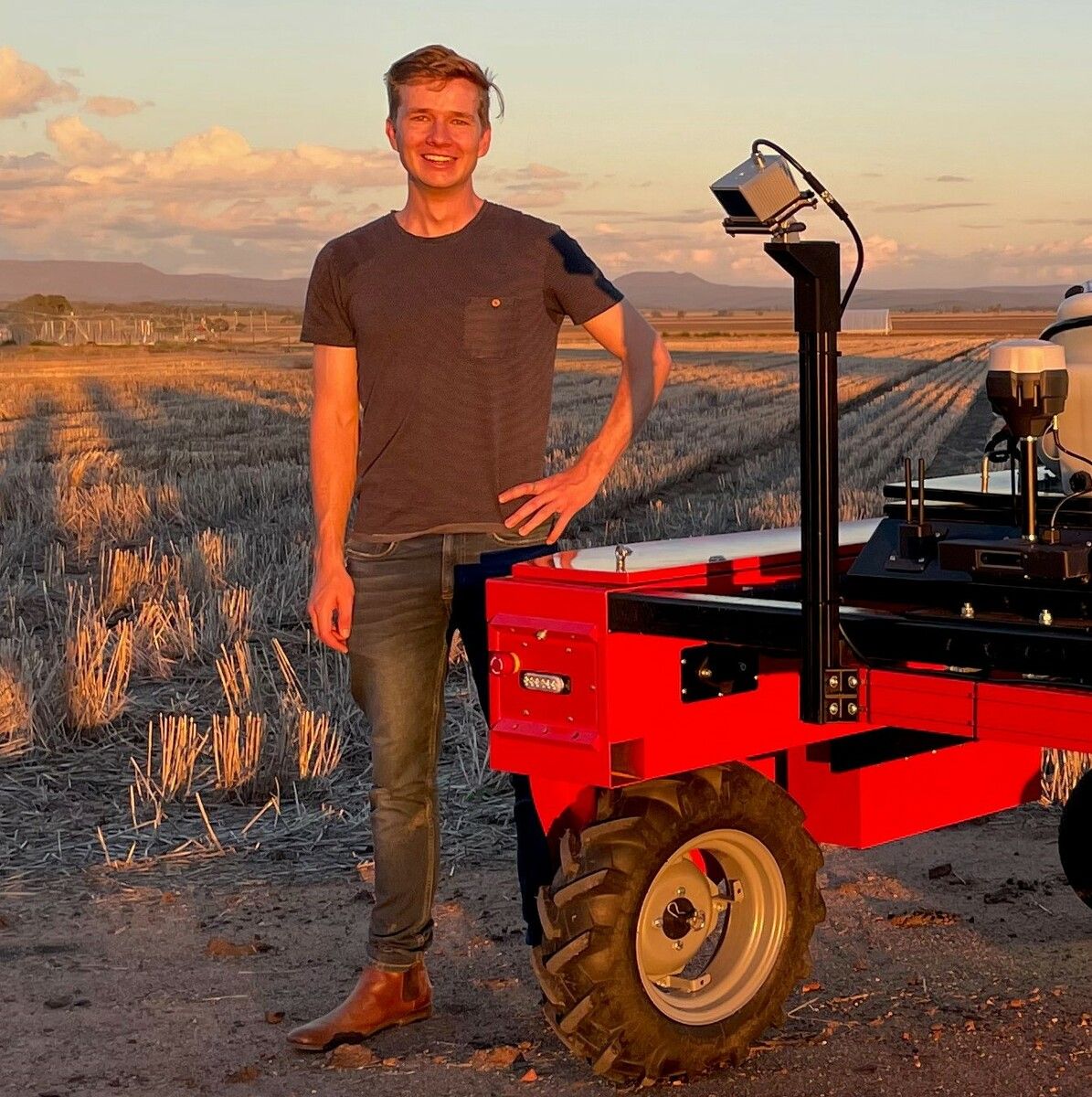
No two farms share the same combination of crops, weeds, soil, climatic, cultural and economic conditions. So why are we building technology as if they do?
According to a recent FAO working paper, there are an estimated 579 million farms worldwide, based on data from across 152 countries. Of these, 85% are smallholders farming less than 2 ha, operating about 9% of farmland globally. On the other hand, operations over 50 ha make up less than 1% of farms (0.6%) but control about 75% of land. At the extreme, the top 0.1% of all farms (those over 1,000 ha, numbering about 300,000) operate 54% of agricultural land. These types of farms are mostly found in Australia (where average farm size is north of 3500 ha), Russia, USA, Brazil and Argentina.

Why does this matter? Because agtech development overwhelmingly targets the farms that control the most land, not the farms that represent the most people. Intuitively, it makes the most business sense, but it means that 85% of the world's farmers, the ones under 2 ha, are largely left out. Even if you expand the lens to include medium-sized operations (50 ha), the technology is still being developed for just 0.6% of the global farming population.
The obvious counter argument here is that this market is much harder target, less favourable for venture capital and is far more diverse and complex than typical large scale operations.
Looking at precision weed control as an example, there is a reason Australia has been a key market - huge scale (many thousands of hectares), high technical readiness, few weeds (more savings) and margins where small percentage savings do make sense. Across the 100 to 200ha of an average farming operation in Denmark, for example, with an equivalent or higher technical readiness, investing in precision application systems has a less clear return on investment (RoI). 10% of a small number is smaller than 10% of a large number after all.
But even by the area-based measure, nearly half the world's agricultural land sits outside the >1,000 ha bracket, which is a big opportunity. Plus this RoI-focused counter-argument assumes the current cost and agtech delivery model is the only option.
So, what if it isn't? What if we could sustainably, profitably and efficiently build tech in a way that lets everyone access it and adapt it to their niches? And what if this approach benefited not just the 99% of farmers but also those 1% that manage 75% of land?
99% of the world’s farmers are underserved by the existing agtech model. Open-source can change that.
Welcome back!
It’s been a over a year since the last OpenSourceAg Newsletter. Amazing how time flies. I had planned to do these on a much more regular basis, but work, life and projects like the OpenWeedLocator seem to always get in the way. So my aim for the newsletter going forward will be to do it on a more ad hoc, ‘write something when I’m feeling passionate’ basis, and probably of variable length.
I have neglected to respond to some emails though, so my apologies - I do always enjoy when people get in touch and ask questions or leave a comment. If there’s a particular topic you’re interested in or would like to discuss certainly reach out. I will do my best to answer! Alternatively, there is the OpenWeedLocator Community if you would like to start a discussion there.
In general, my feeling is the past year has seen an increase in the awareness of open source development as a genuine approach to building in agtech, which is encouraging. Nathan Faleide on LinkedIn has been discussing his work on OpenFMIS for example. In this edition, I want to talk about the business opportunity presented by sharing the recipe, but in coming editions I want to explore:
Data/technology ownership and what happens if a company goes bust?
What does a sustainable open source company/ecosystem look like in agriculture?
How open source facilitates the role of farmers as co-developers in the age of AI/agents.
I also want to challenge the immediate assumption that ‘open source’ means just giving your technology away. It should come up in point two above (hopefully OSA #6 or #7). On point #2 - this is something I am actively trying to test myself. So stay tuned.
And with that, happy reading! (with some exciting OWL announcements below)
Table of Contents
When focus can be detrimental
Open-source: A better fit
Noktura: Beta testers needed
OWL3.0: CE testing starts
Interesting reads/watches
Final thoughts
When focus can be detrimental
There is a fantastic interview by Sarah Nolet of Tenacious Ventures with Guillaume Jourdain, a co-founder of Bilberry. In the interview Guillaume goes through the decision making at Bilberry and why it helped them to a successful exit to Trimble in 2022. It’s an impressive story and some really innovative work from the late 2010s early 2020s when the field was very new. I had the good fortune of meeting Guillaume a few times and hearing about the technology in its nascence. My reading of this is that the story of Bilberry really centres on focus. Focus on a specific region, focus on the RoI and focus on operational scale that was relevant for their company.
I’m not a startup strategist, but in my experience this type of focus is quite commonly highlighted as a goal for startups, and the only path to success. It’s something I think about as well to make sure the OWL is very good at one job and not spread too thin. But, in the precision spraying/weed control space, it means we have many fantastic companies like:
John Deere (with BlueRiver)
GreenEye
OneSmartSpray
AGCO/Trimble (Precision Planting/Bilberry)
CarbonBee
SenseSpray
WeedIT/WeedSeeker
Solinftec
Carbon Robotics
among many more, all targeting very large growers, because of the unit economics that Guillaume talks about above. This same logic applies to these companies too. The issue is, there are so many farmers that are either priced out, or just can’t use these systems because their crop x weed x region combination does not fit the scaling plan, nor RoI target of each company. So, logically, growers look to do it themselves - except all these systems are effectively locked down. You are unable to upload your own model (as far as I am aware) and train it on your own data. You can’t hack the system to make it fit your niche conditions, like farmers have been doing for millennia.
The end result is we have the technology to reduce costs, improve efficiency and decrease environmental risk, but only when the market supports the risk of data collection and model development. You're waiting for someone in a boardroom to decide that your combination of problems is worth solving commercially.
The somewhat frustrating aspect of this, is it mirrors herbicide development and the inherent issues that come with focus on particularly profitable regions and crops. Herbicide companies only focus on regions that will cover the many hundreds of millions required for molecule development and registration.
Except it doesn’t have to be this way.
Going back to the FAO data, no single company, no matter how well funded, is going to solve all of 579 million different farming combinations. This is why open source is so important. It gives people the opportunity to move faster if they want and de-risk it for everyone.
At the moment everyone is out here selling expensive fish, when it would be far more efficient to give people the fishing rod.
Open-source: A better fit
So what's the alternative? I think open source is structurally better suited to the diversity of agriculture than the proprietary, closed model. It worked in machine learning and software, so why not here?
The reality is, unlike herbicide development that requires exceptionally expensive labs and costly chemistry (well over my head), LLMs and AI are undermining the moats that many of these precision agtech companies have. Hardware is another challenge that is far more ‘moatable’, but AI is enabling people to build their own and circumvent your product, if your service has too much friction. It will only get easier.
Consider this - I have a critical weed problem and know the technology exists to fix it, so I go to some precision weed control company and ask about the timeline. They say no, but my weed problem is still there. What do I do? I ask Claude and it gives me the over-confident list of what is needed and how solvable the problem is. Blueprint.am can give me the schematics of how everything plugs together and the OpenWeedLocator repo can be fed into Claude as a base for the software.

Blueprint.am will give you entire parts lists and schematics based off a single prompt
So if someone can just replicate your product, then what is your moat and why is open sourcing it a risk? Your moat is effectively data, support, reliability and user experience.
If someone can just replicate your product with AI, then what is your moat, and why haven’t you open-sourced it?
At that point, keeping it proprietary is more of a risk than open sourcing it and moving people into your ecosystem.
Be the least friction path for people. Let people fish with your product - don’t just sell them the expensive salmon.
Noktura: Beta-testers needed
I'm looking for anyone that works with image data to test out the new platform I've been working on called Noktura (noktura.tech).
Noktura gives you easy upload and sharing of images with detailed, but largely automated metadata collection. The idea is it's an ag-focused image hosting and search platform for entirely open source or locally open (i.e. grower or research groups) datasets.
With rich metadata, you can search for 'wheat with wild radish 24h after rain' and find or share data that may help. I will be progressively uploading unannotated datasets from Terry Antonio, who’s behind the Esperance Zone Innovation Group efforts for image data collection. There are about 100.000 images so far on the platform.
So if you work with this type of data and want to test it out, get in touch and I'll share the invitation code with you.
Many more features to come, but want to test it out at this early stage.

OWL3.0: CE testing starts
There have been some exciting developments over the past year with the OpenWeedLocator (OWL). If you missed the announcement, we’ve launched the much more compact and feature-rich OWL3.0, which we hope to sell as part of kits. A similar approach to the Prusa 3D printers. It will still be open source of course, but we want to lower the barrier to entry.
To sell kits, we’re now in the process CE Certification (required in the EU). So we spent last week on radio emissions and immunity testing, with good results so far. Still another week of electrostatic and voltage spike type tests to come but it’s an exciting step. If you’re interested in a device, you can register your interest here, or follow along on the community page.

The OWL3.0 and new packaging in the test facility.
It's super exciting to see it starting to come together as an open-source product, with the associated in depth certification to back the device up. The design (electrical and enclosure) is entirely the incredible work of Patrick with pemberton.digital - would strongly recommend if you have any PCB/electrical/enclosure work for your agtech product.
Interesting Reads/Watches
Video: How one hack nearly took down the internet
How one hack nearly took down the internet (Watch on YouTube) | Veritasium
This is the story of the XZ backdoor hack, where someone (most likely a nation-state actor) spent two and a half years gaining the trust of a solo maintainer of a small file compression library called XZ. It’s a fairly niche library, but one that happens to sit inside almost every Linux distribution, and therefor every production server globally. The attacker, going by "Jia Tan," eventually took over as maintainer and slipped in some code that would have given access to millions of servers. The cool thing is you can still see the GitHub comments, code reversal and the exact commits made by the hacker.

The classic XKCD comic on challenges associated with open source tools
The backdoor was caught because a Postgres developer at Microsoft named Andres Freund noticed a 500 millisecond slowdown during testing of the latest Linux Debian version. He then traced it back to XZ and in doing so found the backdoor, reporting it and averting what could have been a global crisis.
What is neat about this story is that the backdoor was found because the code was open and we can still see the exact changes that were made on GitHub. This doesn't happen with closed source software. Without this access, who's to say there aren't already state-sponsored engineers inside large companies doing the same thing? The difference is nobody would ever find out.
The other point made is about Linux. The reason for its popularity is because it is so flexible and can be picked up and adapted into all the different niche use cases in the computing and IT world. Governments can pick it up and build custom secure systems with it, agtech devs can build custom tools with it - this wouldn’t happen from a top-down, company-driven approach. Ag is full of niches, so why do we continue to adopt these top-down development approaches?
Definitely worth the 50 minutes.
Final Thoughts
579 million farms cover every climate, weed seedbank, soil type and cropping system imaginable. If we want to improve agricultural efficiency globally, the technology that serves that scope needs to match that reality. The agtech model where a handful of companies build proprietary solutions for the most commercially attractive niches, while the other 500 million farms wait, does not scale.
Open source offers a different path. Not in the sense that it replaces companies, but it empowers people to participate in building the tools they need that serve their niche - it should strengthen companies, whilst improving technology accessibility.
Thank you, as always, for reading.
Cheers, Guy
